Implementing a LIMS: Master Data and Device Interfaces
A laboratory information management system (LIMS) answers three practical questions: where inspection data comes from, where it belongs, and whether it can be reconstructed when a dispute arises. It places sample registration, task dispatch, instrument capture, result review and report issuance on a single data chain, so every test is traceable from sample reception to report issuing. For labs that must withstand on-site audits or system audits, the value of a LIMS is not digitalisation alone but turning inspection records into structured compliance assets that carry signatures and timestamps.
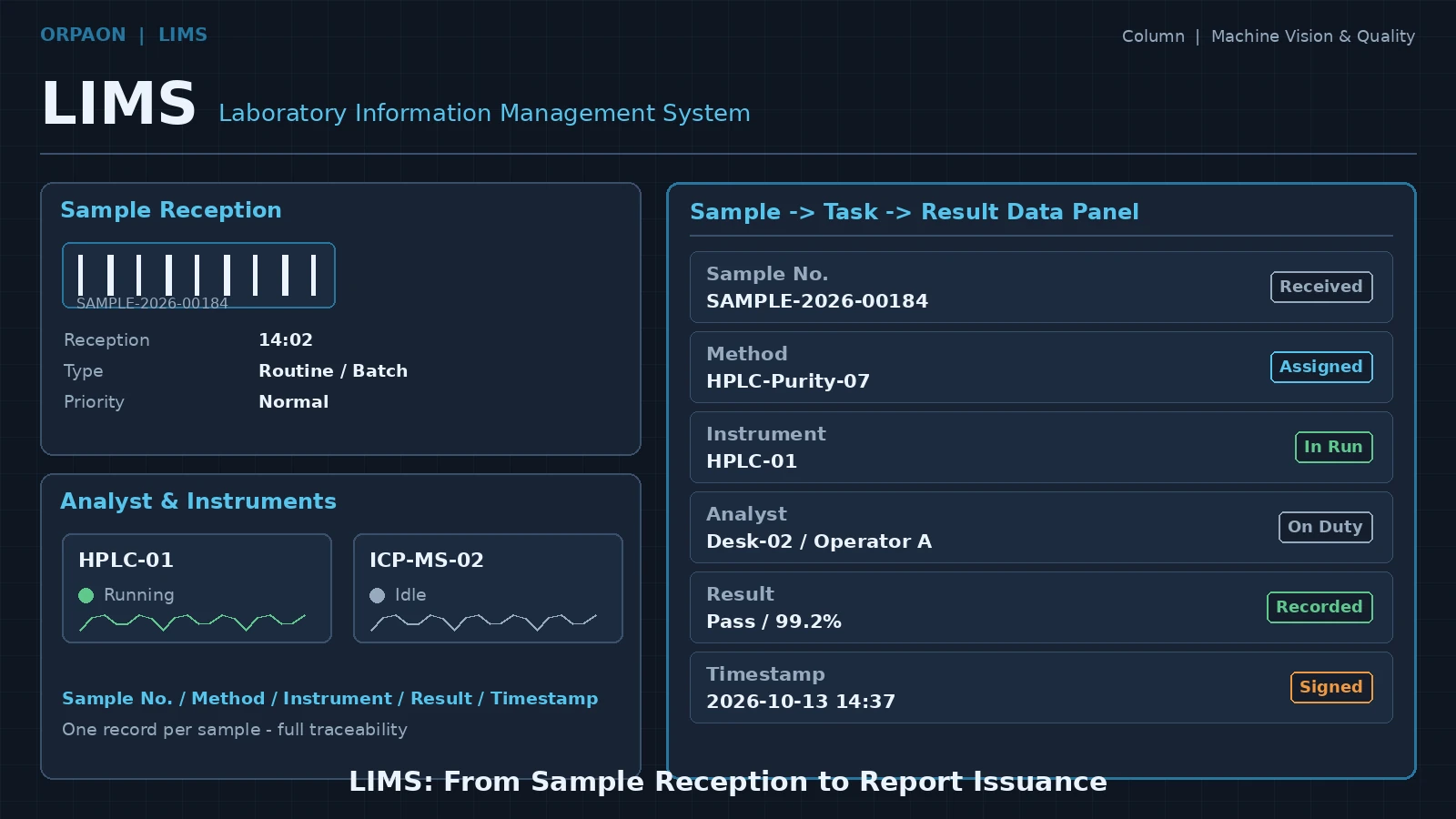
1. What a LIMS manages: the main line from sample reception to report archiving
A LIMS follows one main line in which samples and data move together. On registration, a sample receives a unique number; test tasks are dispatched to the relevant analyst according to the method library; after measurement, instrument data is returned automatically to that sample record; once the reviewer approves, the system generates and archives the report. Along the whole chain, the sample number, test method, instrument, analyst, result and timestamp stay bound to the same record.
Compared with a plain spreadsheet, the difference a LIMS makes is constraint. Numbering rules, method versions, significant figures and acceptance limits are maintained centrally by the system, data entry is validated against those rules, and an out-of-specification (OOS) result triggers the OOS workflow instead of allowing the raw data to be overwritten. These constraints are what make inspection records hold up in a later audit.
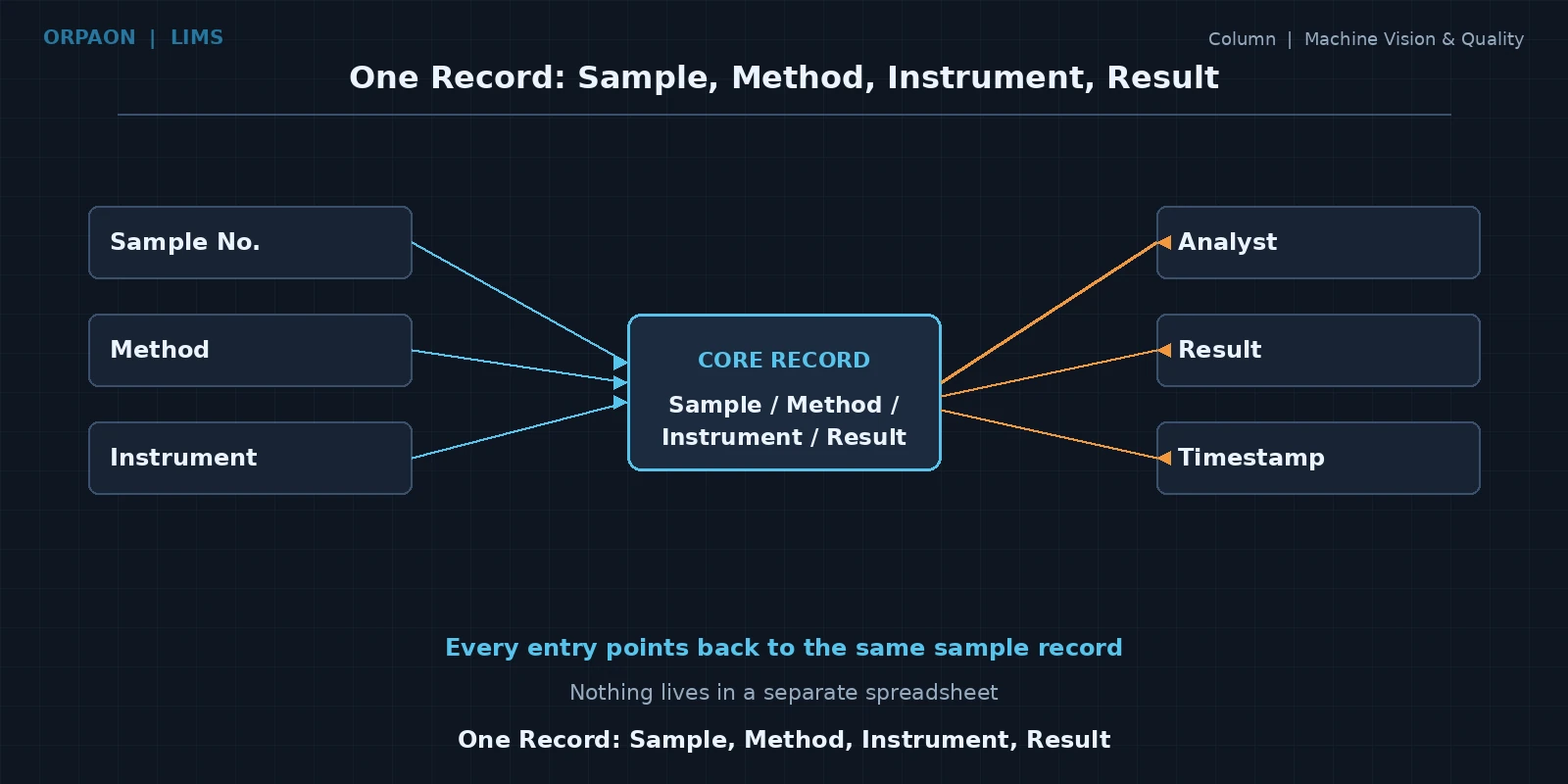
Every step of the inspection data chain should leave a traceable operation record: who did it, at what time, and which step.
2. Master data and numbering rules to settle before go-live
The hardest part of a LIMS project is not the software features but translating the lab's existing paper and habits into a data structure the system can constrain. Before go-live, the following master data items should be confirmed one by one, because they determine whether the system stays stable over time.
| Master data item | What to confirm | Common problem |
|---|---|---|
| Sample numbering rule | Prefix, year, running number, sample category code | Each department numbers its own way; historical samples cannot be aligned |
| Test methods and versions | Method source, version number, acceptance limits | Multiple versions coexist; limits are inconsistent |
| Instrument list and connection | Instrument model, interface type, data format | Some instruments have no communication port and require manual entry |
| Personnel qualification and authorisation | Analyst, reviewer, authorised tests | Authorisation scope is not bound to task dispatch |
| Reagents and reference materials | Lot, expiry, issue records | No reminder before expiry; traceability is difficult |
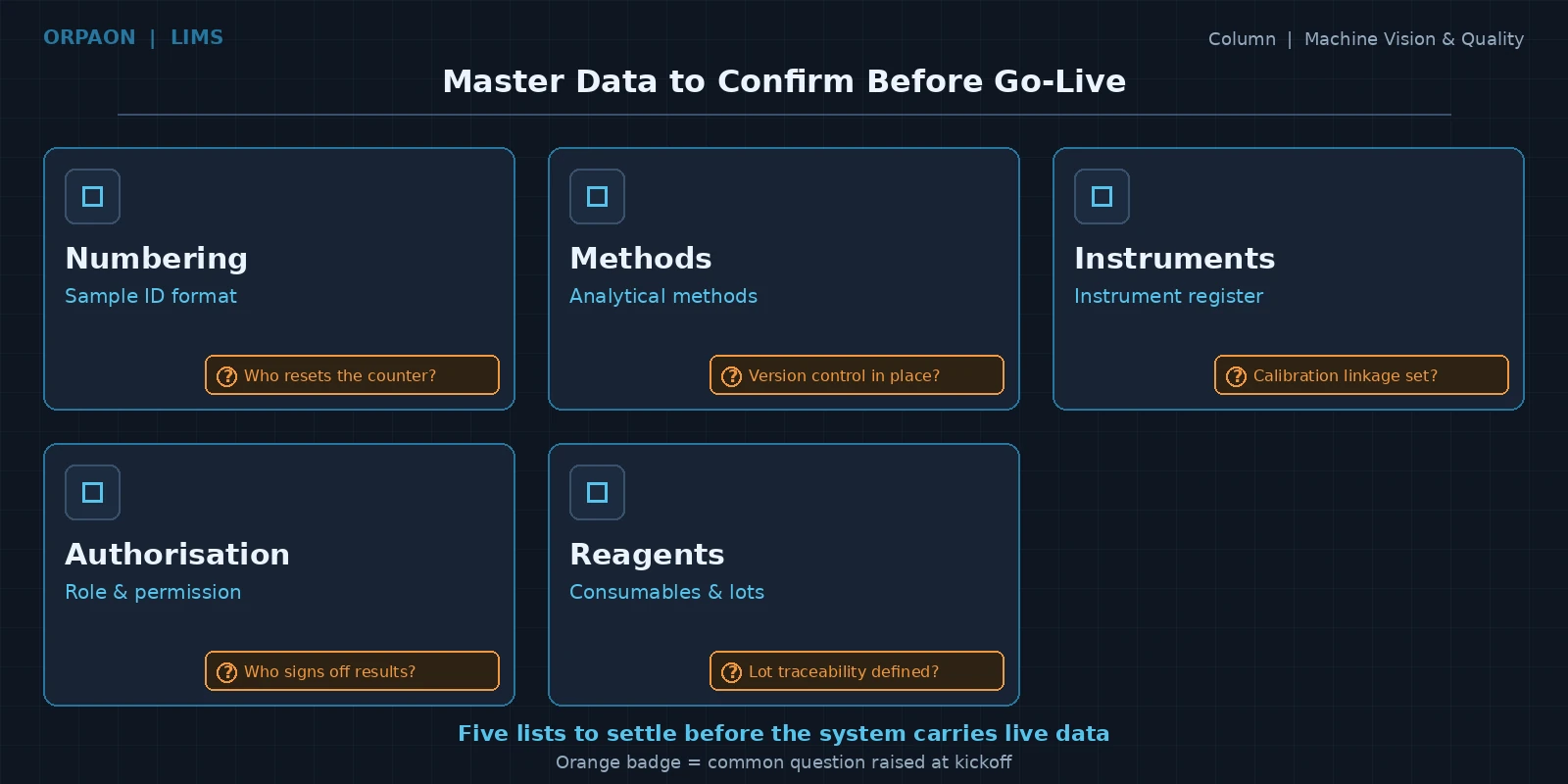
Once the master data is confirmed, the system can unify task dispatch, result judgement and report templates. In practice, master data preparation accounts for more than half of the effort of the whole project, and it must be completed before software configuration begins.
3. Instrument data capture and interface tiers
To automate inspection data, instruments must be connected to the system. In real projects the instruments vary widely and span many generations, so the interface approach is usually rolled out in three tiers according to site conditions, rather than unified at once.
- Instruments with a standard communication port (models supporting serial, Ethernet or common industrial protocols): protocol capture is preferred, with data returned directly to avoid manual transcription.
- Instruments with a local data export function: a capture program reads the exported structured file and maps it to inspection item fields through parsing rules.
- Older instruments with no communication port: manual entry is retained, but the sample number is bound by barcode scanner, and the operator and entry time are recorded as audit evidence.
The three tiers can coexist in one lab. The point of tiering is to automate what can be automated first, while the parts that cannot yet be automated still have a traceable way of recording, instead of sacrificing project progress for interface coverage.
4. Data integrity and audit trail
Once inspection data is used for release or registration, its integrity and traceability become compliance requirements. A LIMS addresses this at a few points: raw data cannot be altered, any change leaves a trail, permissions are separated by role, and key operations carry an electronic signature and timestamp.
An audit trail records the life of the data — who created, modified or deleted a record and at what time, with the values before and after the change. User permissions separate entry, review, release and method modification into distinct authorisations, so the same person does not both test and release. For multi-site labs, data from each site also needs to be brought under one control set, so that reports can be issued on a consistent basis and audits can be handled.
It should be noted that capabilities such as intelligent interpretation and trend alerting in lab automation are being advanced as reserve and pilot directions; we can support joint validation with customers, but do not present them as delivered features.
Conclusion: sort out the data first, then talk about the system
Whether a LIMS project succeeds is often decided before software configuration. If master data is clear, numbering rules are unified, instrument interfaces are rolled out in tiers according to site conditions, and data integrity and audit trail are considered in the design, the system can run stably over time after go-live and genuinely support on-site audits and system audits. For a lab, a record system that can be trusted is worth more than a long feature list.
Book a Solution Discussion
If your lab is planning a LIMS or needs to sort out its inspection data chain and instrument interfaces, contact us to discuss site conditions and rollout order. We engage mainly through solution discussions and on-site diagnosis, and give actionable advice based on the actual sample flow and compliance requirements.
Contact Us